
So I’m behind on blogging and I’m about to go out of order because I actually read this book yesterday. The joy of holidays is staying up half the night finishing a book because you can. Yesterday I read Shulem Deen’s All Who Go Do Not Return, a memoir of his life as a member of a particularly conservative Hasidic sect in New York. Deen’s community is very insular, he isn’t supposed to read secular books or newspapers, watch tv, or go to films. Schools, jobs, the neighbourhood…all part of the community. Marriages are arranged and the rebbe, the head of the community makes decisions for your life that are not negotiable. One member of the community decides not to invite the rebbe to a significant event and his car is trashed.
Deen begins to secretly read books and go onto the internet, becomes a blogger, begins to read historical criticism of the Bible and ends up not only leaving the community but losing his faith all together. His marriage fails and ultimately he ends up with next to no access to his children. It’s fascinating and horrifying and sad and I couldn’t put it down. In many ways it was like reading Tara Westover’s Educated which I also read in a day. Both of them give an glimpse into an insular religious culture and into the struggles when you’ve been denied a decent education of fitting in outside that culture.
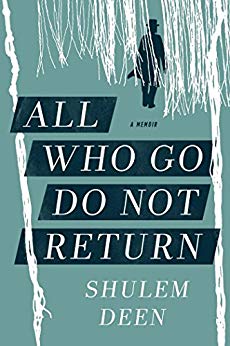
Part of what made me sad was the way in which there was no room in the community to be a little different, to assert any independence, to deviate in anyway from the dictated pattern of life. This was replicated in the way in which there was no room to deviate intellectually either. To ask questions, to read books from outside the tradition, to engage with people outside the community, all these things are prohibited. When he loses his faith it seems inevitable.
When he talks about the questions he has, when he talks about the ideas he is encountering I kept thinking about how I knew about those ideas, I had read some of those same books…why didn’t they shake my faith in the same way. It strikes me that I was fortunate to find myself in a community (in the broadest sense) that allowed for these questions and that allowed me to find my own way of working through questions or not work through them without making me choose between them or the questions. What really struck me was the way in which participation in the community required great intellectual conformance as well as behavioural. I couldn’t do it. And neither could he. But it also struck me as he described his grief at what he had lost, his children being the greatest but not only loss, that those of us in looser communities also don’t experience the intensity of that kind of insular community.
There is a scene in the movie Witness, where Harrison Ford’s character, a police officer hiding from corrupt cops in an Amish community, is helping in a barn building. It is a delightful scene of a community helping out the newly married couple get set up. The next scene shows one of the elders telling the woman Ford has eyes for that people are beginning to talk and if she doesn’t stop it she will be shunned. In ten short minutes you see the price you pay for that kind of tight community.
All communities need to navigate the issue of conformity and diversity somehow and personally I’m not willing to give up ambiguity or my questions even to have a barn built in my backyard. It seems to me to be too high a price to pay.

 60 Before 60