
Of all the Star Trek series my favourite is STNG. Why is this relevant to a discussion of books you may ask. I’ll get to that. While there were some continuing story arcs in STNG they didn’t dominate the series. Yes, there were some two part episodes. Yes there was that mini-theme of the corruption at the head of the federation. But for the most part you can watch any episode of STNG without feeling like you are dropping into the middle of a story. That’s kind of true for Voyager but that series was just so annoying for so many other reasons we won’t go there. Contrast STNG with DS9 and you see what I mean. You can’t really just dip into DS9. The over arching story of the founders etc is just too important for any episode to really stand alone with a few exceptions. People list their favourite STNG episodes. I don’t see that when people talk about DS9. Having said that when I could binge watch DS9 on Netflix I loved it and I could see why people were fans. It’s a great series when you can watch it all together and get caught up in the grand narratives. But if I just want to veg its STNG for sure.
Okay, so why is this relevant for books. I’m thinking here specifically of murder mysteries. Most, but not all, popular mystery writers write series. They have well known main characters and they may allow those characters to age, to grow, to marry, have children etc over time. They may have more than one series featuring different detectives, like Miss Marple and Hercule Poriot, but they commonly write series. Sure there are great exceptions who I really enjoy – Dick Francis wrote almost all of his novels as stand alones. Grisham does as well. Mostly though I like series. And I like series where there is development in the characters, where one feels like one has become part of a community. Some of my favourites are great at this, Louise Penny, Donna Leon, James Lee Burke. I look forward to new novels – I’ve even been known to note the date of release in my daytimer for the yearly Penny.
The trick in a series though is to write a book that stands alone without the reader needing to know what happened in all the previous books yet advancing the development of the narrative of the detective’s life. When it involves ongoing stories of corruption in the police department or an ongoing crime it becomes tricky. Some of Penny’s almost step over the line where the novel feels like an episode in an ongoing series more than an episode that can be watched on it’s own. See the parallel? It is frustrating to read a novel and get to the end and feel like you need to read the next one to resolve the story only it won’t be released for another year. It’s fine when you discover a new author and can pick up a big bag of the whole series at your local used book store or library (aka the book version of Netflix) but very frustrating if you are reading along a series.
Which brings me to my three latest books. I’ve been enjoying the beautiful evenings sitting in my yard reading the last books in series I really enjoy. Yes, I know that this violates the rule about books on my shelf but grandma’s memoir was 30 years old so I figure I did really well reading an old book and will now indulge with 3 new books.

The first was Peter Robinson’s new book Many Rivers to Cross . I really like DCI Banks and usually really enjoy Robinson’s books but this one frustrated me. He’s introduced an ongoing story about sex traffickers from Eastern Europe that has been running for several books now. In this book Banks is investigating a couple of deaths while alongside that story another character is involved in hunting down traffickers. It isn’t clear if the two narratives are related and I won’t say anything that might ruin the story. It is enough to say that at the end of the book I was really unsatisfied. It felt very much like there really wasn’t enough in this book to be a stand alone book. It lacked a clear focus and the Banks story just didn’t feel meaty enough to be satisfying. It wasn’t a terrible book anymore than individual DS9 episodes are terrible just because they need the bigger story. But it was unsatisfying without a sequel to turn to immediately. And when you have to wait a year for the next episode it is easy to lose interest.
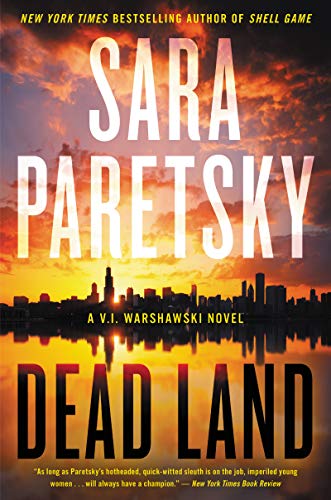
How different were Sara Paretsky’s and Deborah Crombie’s newest novels. Paretsky’s novel Dead Land centres on the story of a homeless woman and ends up being a complicated story of Chilean politics, Chicago corrupt government officials, corrupt lawyers and academics, land activists, and dogs. It was great. Deborah Crombie’s, A Bitter Feast, centres on a holiday weekend in the Cotswolds with several of her main police detectives and is a really enjoyable story about chefs and food and broken relationships. It’s just a great read.
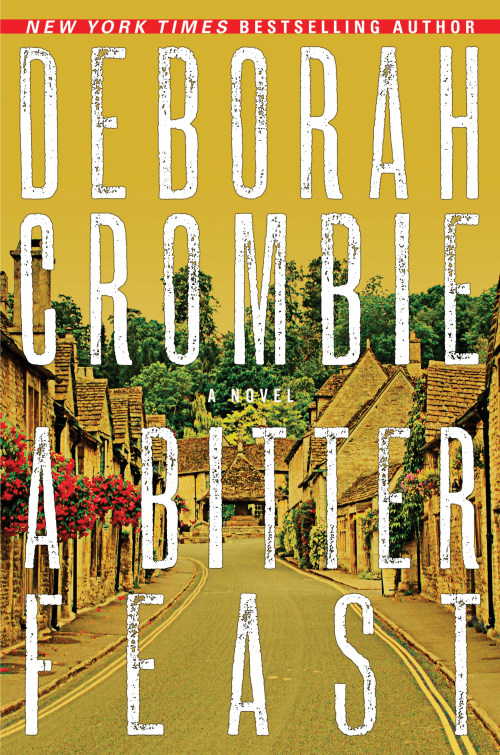
The thing with both the Paretsky and the Crombie mysteries is that interesting things do happen with her characters – they aren’t the same people they were 10 books ago. And I like them well enough that I want to spend time with them. (Contrast this with the latest Patricia Cornwell where I realized about 20% in that I don’t like her characters and I’m sick of reading about their dysfunctional relationships and life was to short to keep reading just because I had already invested a couple of hours into the book). And each book is a satisfying story – complex enough, puzzling enough – to be enjoyable all on it’s own. Now if they could only write them faster!

 60 Before 60