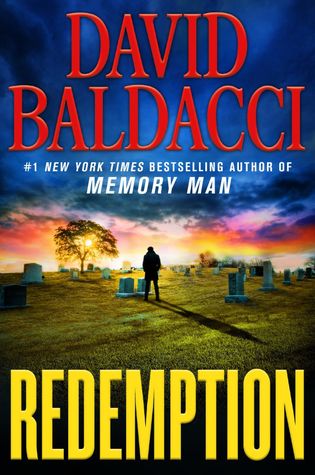
Another library book but this time I read it in a day. David Baldacci’s new novel Redemption was on the Top Reads table at the library and I like Baldacci’s Memory Man series so I took it out. It can’t be renewed so the other day when looking for a potboiler I realized I better get it read so I can take it back. With that incentive I started and frankly I had a hard time putting it down.
This is not an important book or a prize winner but I really enjoyed it. Baldacci’s last book dealt with the opioid crisis and this one deals with Russians. He’s topical and while not overtly political there is an interesting subtext in his books. Mostly though I just read it as a engrossing escape from the daily news and it didn’t let me down!
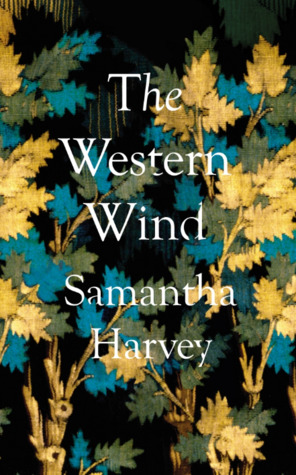
Part of the objective of this project was to wean me off buying every book that caught my fancy only to languish on my shelf and it has helped with this. I’ve certainly become much more dependent on my local (excellent) library for books. This is a good thing because a friend recommended The Western Wind by Samantha Harvey and it was in our library. He spoke very highly of it as a sort of murder mystery set in 15th century England and said it was very accurate theologically and religiously.
It took me a week to finish because it may be historically accurate but that period of history could be very depressing. I was not tempted by descriptions of mud and disease and poverty to stay up all night reading. This book really depressed me.
That said it is very well written and it may be that if the daily news was less depressing perhaps I would have had more energy for it. The narrative flows backwards. The book opens on Shrove Tuesday, moves to Shrove Monday, and then ends at the beginning on the Sunday. From the first pages you know that a member of the village has drowned but it isn’t clear whether it was suicide, murder, or accidental. The dean has arrived to ferret out the murderer (he may be wrong but he’s never in doubt) and much of the novel involves the village priest hearing confessions in preparation for Lent and then discussing those confessions with the dean who isn’t above eavesdropping either. When I found out at the end of the novel what the priest knew all along I wanted to reread the whole novel to see if he had been a reliable narrator or not. It felt a bit like The Sixth Sense except there was not quick flash through scenes to show you you had in fact misinterpreted what you had seen.
I really didn’t have the energy to reread the book and as a murder mystery it is frustrating to find out what the main character knew all along so the whodonit really isn’t. Yet it haunted me and messed with my head for a week so it is a worthy read too.
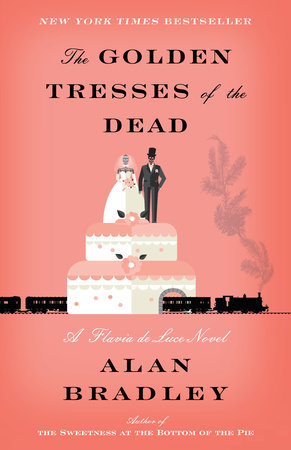
So I finally caught up to Alan Bradley and the Flavia mystery series. The Golden Tresses of the Dead is the 10th in the series and a very enjoyable read. I’ve downloaded most of them from the public library and they are fun bedtime reading. There is less family drama in this one than some of the earlier ones – Bradley has married off the oldest daughter and killed off the dad. So most of the book involves Flavia and Dogger who works for the family but is really a father to Flavia. And it looks like her pain in the neck cousin is going to start playing a bigger role too. Can’t wait until #11.
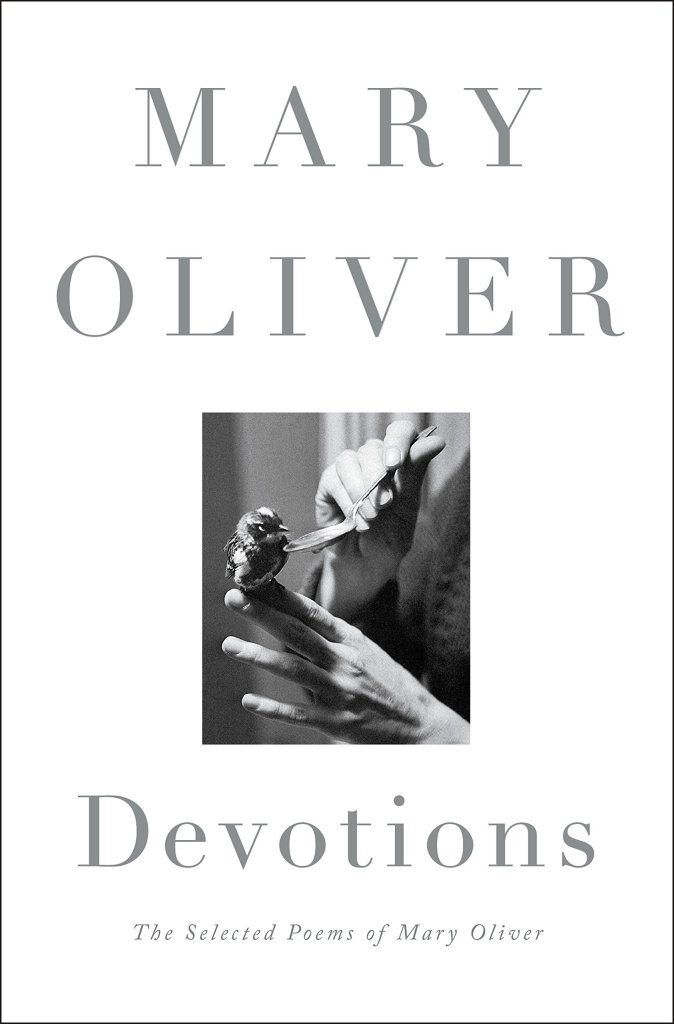
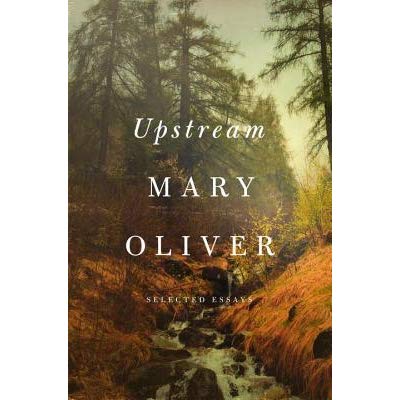
Yesterday was the first anniversary of the death of Mary Oliver, one of my favourite poets…maybe favourite. I gave a talk on her last week so pulled two of her books off my shelf and read them finally. Upstream is a collection of essays and Devotions a selection of poetry from many of her books.
Both are beautiful books. It is in Upstream that Mary Oliver writes her oft quoted remark that attention is the beginning of devotion. There is a triptych of essays on creatures she pays attention to that are especially moving: a spider, a wounded gull, and an owl. It was the essay on the wounded gull in which she describes all of their efforts to care for it until ultimately it died that gutted me: “We grew fond. We grew into that perilous place: we grew fond.”
Devotions is a wonderful read…it includes all her famous poems, like “The Summer Day” and “When Death Comes” but it also introduced me to poems I didn’t know. I have read that there have been critics who dismiss her poetry as too simple, essentially as not intellectual enough, but what struck me reading so many of her poems at one time is how often what starts as a description of some wildlife becomes a moral claim on your life. If you truly see then you shall be changed. In an interview with Krista Tippet she said she cared very much about climate change but she thought you could catch more flies with honey than with vinegar. If she could help people fall in love with the world around them then perhaps they might try to save it. But then there is also this poem:
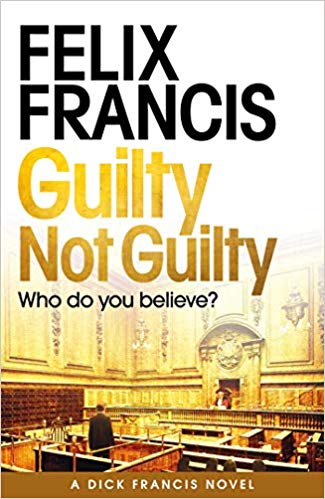
For decades I read Dick Francis novels, mysteries all with some kind of horse connection. They were great and then near the end of his life some were not so good. I read an article that said his wife had been his editor and she had died. But then his son started editing them (with credit unlike the wife) and they got better again. Then the elder Francis died and his son Felix started writing on his own. Like his dad his novels had horse connections but they tended to be grittier than his dad’s. It was all good though – I enjoyed them all.
Felix’ latest is Guilty Not Guilty about a man whose wife has died and he’s accused of her murder. She’s had a long struggle with depression and has attempted suicide. He has a connection to horse racing. It was okay. It wasn’t particularly memorable and the horse connection was really very peripheral to the story. It’s a good airplane/beach/before bed kind of story but it will fade from memory quickly unlike some of his others.
A year ago a friend recommended Yossi Klein Halevi’s At the Entrance to the Garden of Eden so I got a copy and then stuck it on a shelf to languish. A chance comment by another friend reminded me of it so I picked it up and read it slowly in October. Since then the book has haunted me, coming to mind in unexpected ways. Written almost twenty years ago, the book is the account of an American born, jewish Israeli journalist’s attempts to meet and pray with christians and muslims.
Halevi didn’t write this as a political or historical account of the State of Israel and so even if it was written more recently it wouldn’t be a good source for an understanding of the current situation in Israel. Instead, he believes that believers coming to pray with each other, encountering each other heart to heart holds possibilities for the healing of the nation.
As a christian I found this book painful at times because he talks about the ways in which two thousand years of antisemitism and violence have led to fear and distrust. It is tempting to dismiss this as the past or to say, it wasn’t me, but sitting with it, listening to it, being willing to listen to another person’s experience is part of the heart to heart encounter.
His descriptions of praying with christians and with muslims are very moving. It seems to me that historically the really fruitful encounters of people of faith have happened among monastics and mystics. Theologians may engage in this kind of transformative encounter too but it seems rarer. It is pretty clear from the book though that these encounters are rare and tend to happen at the margins of the traditions. But they hold the possibilities of healing and peace.
So in the last three months I have read one book cover to cover that is a “serious” book and will write about it next. One book. Ugh. I have read lots of bits and pieces of other serious books but overall the last three months have been the busiest work months of the last 25 years…3 new projects and a 25th anniversary celebration. It has been hard on reading. I did, however, listen to a bunch of audio recordings of Inspector Montabano mysteries and could have included them but won’t. And I did discover a new series of mysteries thanks to multiple friends. In October I posted on Facebook that I was looking for recommendations for books for fourteen year old girls who were bored by romance novels. Several friends recommended the Flavia de Luce mysteries. I decided to try them out first and quickly fell in love with Flavia. I have read 9 of them now (the 10th is on hold at the library!) but bought some of them so will give myself credit for five.
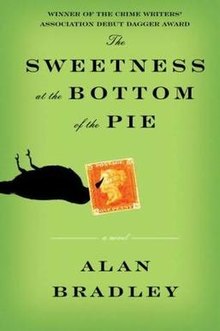
I remember when many of my friends were reading Sweetness at the Bottom of the Pie when it first came out but for whatever reason I never picked it up. It begins the story of Flavia, an 11 year old girl living outside of London in a decaying mansion with her father, his friend/servant/fellow war veteran Dogger, and two miserable sisters in 1950. Her mother has died in Tibet in a climbing accident and her father has essentially checked out to grieve. They have a housekeeper/cook who comes in daily and an assortment of friends from the village. Flavia is an avid chemist with a particular passion for poisons and ends up solving a series of murders, one per book. There is a subplot involving a family tradition of serving in some secret spy service of the British government and both Churchill and the King make appearances in novels.
In some ways these books would work as YA reads but there is a darkness to them too that might make them hard reading depending on your sensibilities/sensitivities. The family is decidedly dysfunctional with two really cruel sisters tormenting Flavia with accusations that she was the cause of their mother’s death and dad really not attending to the girls at all. Dogger suffers horribly from PTSD, the result of terrible treatment in a POW camp in the war. And the family lives in the shadow of bankruptcy and the loss of their ancestral home. Having said this they make great reading when the only time you have to read is while eating a meal or before bed.
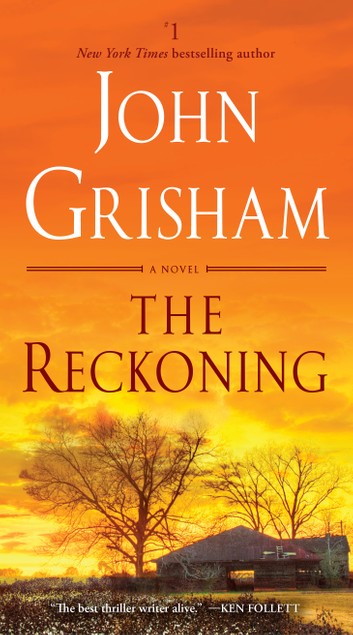
Read John Grisham’s The Reckoning. Not one of his best. In the end the story is tragic and miserable. In the middle is a long detailed description of the experience of American soldiers captured by the Japanese in the Philippines. Grisham is clearly fascinated by the history. It isn’t clear what it adds to the story of why a returned soldier murdered the Methodist minister in town. I usually like Grisham’s novels a lot but this one isn’t memorable. On the other hand it is really long so you get your money’s worth.
This May Rachel Held Evans died tragically at the age of 37 from a reaction to antibiotics. For weeks my facebook feed was full of posts from friends of their tributes to Evans and the tributes of others. Over and over again my friends spoke of their deep sense of grief at her death and wrote of her profound affect on their faith. For the women I know who grew up in fundamentalist churches especially Evans had been a source of inspiration and encouragement.
I understand this and share their grief. I thoroughly enjoyed Evans books and have used them with adult confirmation classes. I especially loved her book Searching for Sunday which does a beautiful job of exploring the seven sacraments both intellectually and personally. She was a really engaging writer and was able to weave together academic understanding with pastoral and personal exploration in a way that is rare.
I have been meaning to read her last book Inspired for a while and so in August listened to the download version from the library. When I finished I started rereading parts from my own copy which had been sitting in my to-read pile. It is a beautiful book.
Evans weaves together contemporary retelling of Biblical stories with academic scholarship and her own journey with difficult or perplexing texts. I learned a lot from her and even things I already knew took on a significance they hadn’t had before for me because of the ways she retold the story. For weeks her insights kept showing up in my sermons and I find myself thinking of the book often.
Evans did her own audio book and this gives it a poignancy and sorrow that wouldn’t have been there had she not died so young. When she talks about how she plans to read the Bible to her sons it is difficult not to weep for her and for them. One can only hope that when they are older they will be able to listen and hear both her love for them and her love for scripture.
When I first moved to Hamilton to study at McMaster I lived on the top floor of an old three story walkup only a few minutes from campus. The neighbourhood was beautiful, old, large homes with big trees, and lots of quiet streets to wander down. A friend and I were walking one evening and I was exclaiming over how beautiful the homes were and how this was my dream neighbourhood. She responded that she used to think this too until she became a social worker. Now she said she knew too much about the secrets that lie behind those curtains.
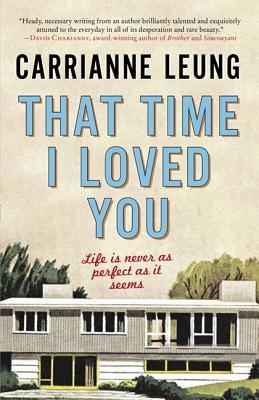
Carrianne Leung’s That Time I Loved You is that kind of glimpse behind the curtains into the secret lives of people. Set in a Scarborough suburb in the late 70s and early 80s it reads like a series of interwoven short stories with each chapter written from a unique perspective. There is one teenage girl who shows narrates a few chapters but mostly you revisit the same incidents in the neighbourhood but from different perspectives. The most significant events in this neighbourhood is a series of suicides which rock the community.
Most of the families are immigrant families who have been able to move to the suburbs after great labours as newcomers. Leung’s glimpses into the struggles facing newcomers to Canada are fascinating and that alone would have made the book worth reading. Add to this a fascinating study in human relations especially from the perspective of teenagers and you have a really engaging read. I read it in one sitting.



 60 Before 60