Although I read a lot of murder mysteries I did read some non-mystery fiction. How to Pronounce Knife by Souvankham Thammavonga was really interesting. It is a collection of short stories about Laotian refugees/immigrants and I will never look at nail parlours the same again.
The Beekeeper of Aleppo by Christy Leferi was engrossing but the whole time I kept wondering about a novel written by a non-refugee from the perspective of refugees. Still it was engrossing and generated an interesting book group discussion.
A friend lent me Ken Follet’s new tome The Evening and the Morning and it weighed so much I had to buy it for my kindle because I couldn’t hold it up without my arthritis complaining. It is a heavy book in other ways too. Lots of corruption and plotting that struck too close to home for comfort. I didn’t like it nearly as much as his earlier books to which this one is the prequel. And I agree with one reviewer who said he needs to stop writing sex scenes from a woman’s point of view because he doesn’t get it.
I found Homeland Elegies by Ayad Akhtar really hard to put down. I read afterwards that it is a mixed memoir/novel and now want to reread it to see what seems like what. It is a really gripping novel about the son of immigrants and his experience of being Muslim in America.
So a funny thing happened on the way to 60. For reasons I don’t understand I didn’t want to get to book 60 so far ahead of my birthday. And a new bookstore opened in town and I completely abandoned the whole, don’t buy books, read what you have premise. When the bookstore owner tells you that she is worried she’s enabling unhealthy buying you know you have really abandoned the premise.
Now the truth is that I have read lots that I got out from the library and some that I bought with gift cards (two of my gross rationalizations from earlier) and I’ve read a couple from my shelves. So I’ve chosen two books that meet the criteria for books 59 and 60 and then will post the list of everything else I’ve read. And since I’m now on holidays I expect to be reading a lot more in the next few weeks. Joy!
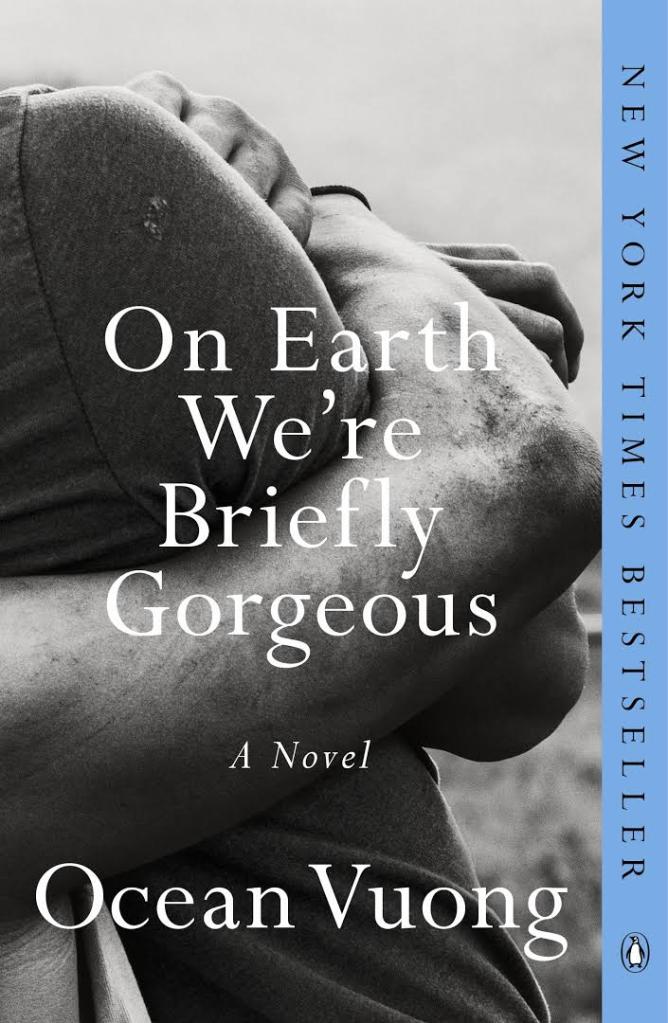
Book 59 was Ocean Vuong’s On Earth We’re Briefly Gorgeous. What a beautiful and tough book. This is what I wrote on FB about it:
– oh my – there is something about books written by poets – you are reading along and then there is a turn of phrase, a play of language, that punches you in the gut…this is a first novel about a Vietnamese refugee boy growing up in Hartford with his mom and grandma…it is about being an immigrant, about being traumatized by war, about being gay, about the opioid crisis, about toxic masculinity, about cruelty and beauty…I had to take a break between part 2 and 3 to read some Phryne Fisher because it was interfering with my sleep but is really worth reading
A few weeks ago I took a week for study leave and sat in my back yard reading novels and memoirs by people of colour. It was a fascinating week that stretched me. Only one was a book from my shelf – I went to Chapters, pulled up their list of black and indigenous writers and pulled four that interested me. So the legalist in me thinks they shouldn’t count towards my 60 but God willing I’m going to pass that goal soon anyway and I still have 11 months until I turn 60. It’s hard to go a day without a rationalization.
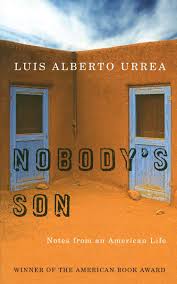
Urrea’s book was already on my shelf. I had picked it up after reading an interview with him a year or so ago. His father was Mexican general and his mother a WASP from an establishment family on Staten Island. This is a memoir that gives glimpses into his childhood, his parents’ volatile marriage, and the tensions in his identity as neither truly Mexican or American. It’s a really powerful, often very moving book. After marrying his parents end up living a much more financially constrained life and it gives some interesting glimpses into the intersections of ethnic and class identity. It also gives some disturbing glimpses into the impact of a toxic masculinity that tried to ‘toughen’ him up as a boy. Now I want to read more of Urrea’s poetry and fiction. He’s a beautiful writer.
Frying Plantain is a first novel by Zalika Reid-Benta set in Toronto . The protagonist has been born in Canada to a mother who had come from Jamaica. She is treated often in school as not really Canadian but her friends who were born in Jamaica don’t consider her truly Jamaican either. So she too is caught between two identities. Her mom is a single mom with a difficult relationship with her own mother. They often need to turn to the grandmother for help because of economic struggles but that help always comes with complicated obligations.
I love campus novels and this one is a great contribution to the genre. Brandon Taylor draws on his own experience as a queer black student in the midwest to write this novel about a queer black grad student from Alabama who has moved north to an unnamed university to do his research in biology. There he discovers that he doesn’t really have a place among the other grad students who along with the profs subject him to a multitude of micro aggressions. As I read it I kept thinking about what Kendi says about how calling these things micro aggressions fails to capture how soul destroying these acts are. There is even a scene where a white woman weaponizes his status as a black man to cover up her own screw up. Much of the book is really disturbing.
I hadn’t heard of this novel or writer until I found it on the list of indigenous books at Chapters but wanted to read it as soon as I heard it was set on the Peguis reserve in Manitoba and in Winnipeg. I don’t know this reserve but I know some of the area spending my summers growing up on Lake Winnipeg. And when he writes about Winnipeg I can see the places he’s describing. The novel moves back and forth in time and place from Jonny’s childhood on the reserve and his life in Winnipeg. He’s two-spirited and the novel describes scenes of violence at the hands of men who want to ‘toughen’ him up similar to those Urrea describes. The life he describes on the reserve is a complicated mix of trauma, abuse, addiction, but also love, generosity, good humour, and resiliency. One week in my reading group we had a long discussion about the ways in which groups get labeled as traumatized people – a point Kendi wants to resist – and I thought about that a lot reading Whitehead’s novel. I find myself thinking about this novel a lot and have since discovered I’m slow to this party as many of my friends love his work already.
My favourite read of the week though was We Have Always Been Here by Samra Habib. I basically read it in one sitting because I couldn’t put it down. This is a memoir by a writer who came to Canada as a refugee with her family when she was in elementary school. They are part of a small sect who are persecuted by the Pakistan government and fled the threat of violence. Her marriage was arranged by her mother when she was 13, she married at 16, and was divorced at 18. She married again only to divorce him when she realized she was queer. There is so much in her book about the experience of an immigrant family, discrimination against people of colour and muslims, and the tensions in her own family over the role of women and sexuality. I found the book so engrossing and thought she addresses some of the issues of sexuality and gender really well that were the weakest in Kendi’s book. It is good to read them together.
I really valued reading these books and have another pile of novels and memoirs to continue reading writers of colour. A friend of mine has made a commitment to read books by women and people of colour for a year – each month she’s focussing on a different scholar – and won’t post any writing on facebook by white men for the same year. I’m curious to see what she learns by doing this. I know that this opened me up to a bunch of experience that isn’t mine and I enjoyed it even as I was challenged by it. Often when white folk post that they are going to do this it sounds like a penance. Maybe that’s part of the problem with some folk – we don’t like stepping out of our comfort zone much. But this is a happy quest for me and one I’d recommend highly!
When I first moved to Hamilton to study at McMaster I lived on the top floor of an old three story walkup only a few minutes from campus. The neighbourhood was beautiful, old, large homes with big trees, and lots of quiet streets to wander down. A friend and I were walking one evening and I was exclaiming over how beautiful the homes were and how this was my dream neighbourhood. She responded that she used to think this too until she became a social worker. Now she said she knew too much about the secrets that lie behind those curtains.
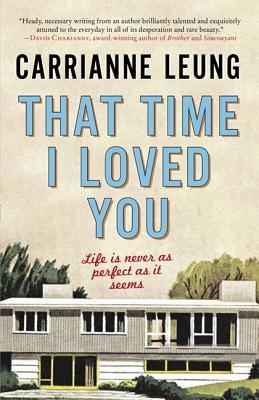
Carrianne Leung’s That Time I Loved You is that kind of glimpse behind the curtains into the secret lives of people. Set in a Scarborough suburb in the late 70s and early 80s it reads like a series of interwoven short stories with each chapter written from a unique perspective. There is one teenage girl who shows narrates a few chapters but mostly you revisit the same incidents in the neighbourhood but from different perspectives. The most significant events in this neighbourhood is a series of suicides which rock the community.
Most of the families are immigrant families who have been able to move to the suburbs after great labours as newcomers. Leung’s glimpses into the struggles facing newcomers to Canada are fascinating and that alone would have made the book worth reading. Add to this a fascinating study in human relations especially from the perspective of teenagers and you have a really engaging read. I read it in one sitting.
A few days ago Macleans released an article on the working class in Canada focussing on the work of Wolfgang Lehmann, a sociology professor at Western. Lehmann studies the experience of working class students in university and this was the focus of the article. https://www.macleans.ca/society/what-does-it-mean-to-be-working-class-in-canada/ It is a fascinating article and echoed many of the things a friend has said to me about going to university after growing up in a mill town.
In each of the last three summers I’ve read a memoir by someone who grew up poor and disadvantaged and yet achieved stellar educations. Two summers ago it was J. D. Vance’s Hillbilly Elegy. Last summer it was Tara Westover’s Educated. Vance’s book details how he grew up in poverty in Ohio but after serving in the marines was able to attend Yale Law school. He describes the obstacles that stood in his way, both in getting to university and to fitting in once he got there. It was a bestseller but was also criticized by some for underplaying the systemic barriers at play for many poor students, particularly those of colour. Westover recounts her childhood in a fundamentalist mormon family where the children didn’t go to school or access medical treatment. But she loved learning and is able through a remarkable effort to teach herself enough to get admitted to BYU. Ultimately she is able to study in Cambridge. This is also a gripping book and became a bestseller. Both writers offer insight into the challenges they faced of not “belonging” at university but also becoming alienated from their own families and communities because they have gone.
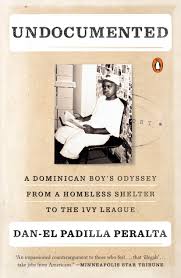
After reading a review this winter I picked up another memoir in this vein, Undocumented, by Dan-el Padilla Peralta. Peralta, who now is a classics professor at Princeton, came from the Dominican Republic as a boy with his parents to live in New York. His father returned after the birth of his brother but his mother decided to stay with her two sons although only her youngest had papers once her visa expired. Undocumented is Peralta’s story of growing up in living in constant fear that their lack of papers would be discovered and they would be deported. He loved books and learning and was fortunate to meet people who opened doors for him – a private school education that led to Princeton and then Oxford. Ultimately he was given papers and allowed to return to the US where he did a doctorate at Stanford. In many ways it is an exceptional story and he addresses that clearly in the last chapter. He now advocates for immigration reform and for other undocumented students and he knows his story is not typical. He attributes much of it to luck and refuses to see his own story as a “rags to riches” story of personal accomplishment. The system is broken and has gotten even worse since 2015 when the book was published.
I remember reading John Osborn’s classic account of Harvard law school, Paper Chase, and being inspired to study study study. Peralta’s book inspired in me some of that same love of study and desire to immerse myself in reading. It is difficult to explain to those who see reading as a task or chore how it can be a delight and magical as it clearly is for him. Reading opens up a world to Peralta as they are living in a shelter. It is fascinating to read how he discovers classics and to read his reflections on why it is largely a white discipline.
A big part of what is both painful and engrossing about the book though is his account of what it is like living in multiple worlds and not feeling at home in any. The energy that goes into keeping secret his status is exhausting. And then there is the discussion over what it means to be black on a predominately white campus and whether he has an obligation to speak out about his immigration status. It’s a powerful read.
One last thought: Peralta is very clear that he was fortunate to receive support and love from teachers and others along the way. His story is a great example of how people can make a huge difference in the life of a child by showing up, by challenging them, and by loving them.




 60 Before 60