Well I’ve finished all of the Wesley Peterson mysteries in print – #28 will be released in August. They are mostly fun. The set up of a parallel historical mystery alongside the contemporary murder remains far fetched but actually works better in some of the later ones because the connections between the two are better made. I enjoy reading about the archaeology stuff in any case so it doesn’t really matter. There is no mention Covid or Brexit though so for all the connections to the past history of Britain there is very little sense of current events. I like the characters and I get caught up in the story quickly so happy I found them.
A friend put me on to another British mystery series, a police procedural set in Oxford. Simon Mason’s books are a very different experience from Ellis’s or even the Morse series. A Killing in November is the first and involves a murder at an Oxford College to which the wrong detective is dispatched. Ryan Wilkins is a working class, damaged, single dad, who grew up with an abusive father and who could ask easily ended up in prison as the police force. He’s sent instead of Ray Wilkins, a polished, public school educated, well dressed detective who is the ‘right-sort’ to investigate a crime at a college. The two end up being paired and chaos ensures but also some excellent detective work and a strange kind of friendship. In the second in the series, The Broken Afternoon, you begin to see that Ray is actually as messed up as Ryan. They aren’t easy reads but they are gripping. And the Oxford they reveal is not the idyllic ivy covered world Morse inhabits.
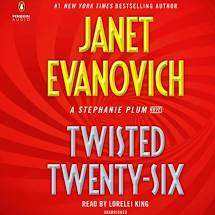
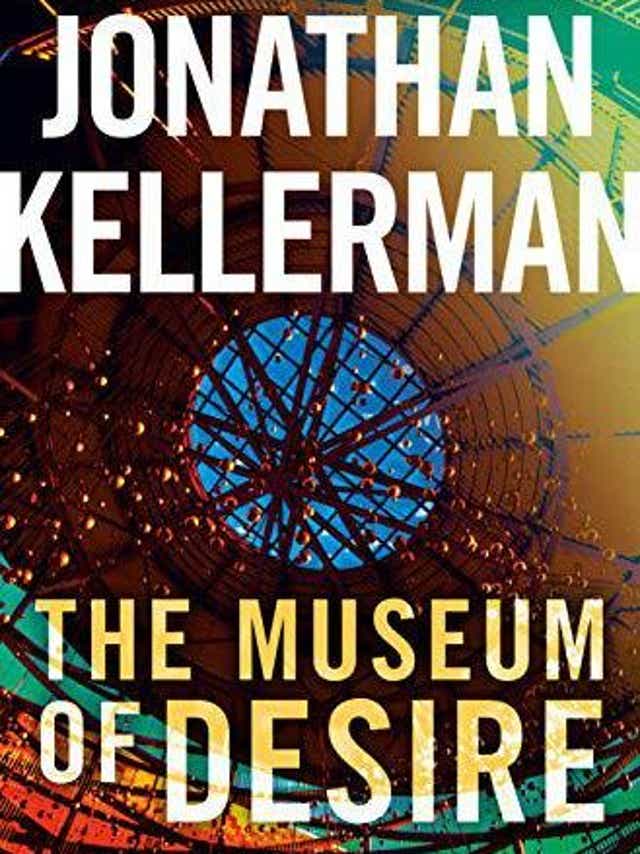
Further in the realm of mysteries I enjoyed the latest Jonathan Kellerman, Alex Delaware and Milo Sturgis mystery, The Ghost Orchid. This is #39 in the series and I continue to enjoy the friendship between the two men and accompanying them as they sort out the psychological ins and outs of the people connected to the crime. On a much sillier note, the most recent Janet Evanovich book, Dirty Thirty, is a hoot. The Stephanie Plum books are romps in which Stephanie never shows any emotional growth, all the characters are pretty one dimensional, and yet the chaos of her incompetence is pretty amusing. This is the poster child of the light read but I was recovering from covid and it was perfect for my foggy brain.
So that’s 21 of the next 65 reads accounted for. Next post, the non-mystery fiction.
My light reading this month has been to continue the Wesley Peterson mysteries set in Devon. So far I’ve read The Shining Skull, Flesh Tailor, and The Blood Pit. I’ve gotten a bit out of order because of what was available at the public library. The premise is that Wesley’s friend and archaeologist Neil Watson is always working on a dig that mirrors the murders Wesley is investigating. It’s a pretty ludicrous set up by book 13 but they are fun and I’m enjoying them. My more serious fiction right now is Abraham Verghese’s The Covenant of Water which I am savouring. I’m listening to the audio book read by the author and it is achingly beautiful and sad and moving. I’m about 60% through it now and already grieving that one day soon I will finish it. Then I expect I may have to read the paper copy so I can write out the lines I never want to forget. I loved his earlier novel Cutting for Stone and kept buying copies and giving them away. I think this will happen with this one too.
I’ve gotten out of the habit of reading the books on my shelves instead of constantly buying new ones that pique my interest only to be too busy to read them. This year I did the Goodreads challenge and read 74 books most of which were murder mysteries read before bed. Work was intense and insomnia was my constant companion. But there were more challenging reads mixed in there.
I read all the long form journalism I can by Rebecca Solnit, Masha Gessen, and Timothy Snyder and loved three of their books I read this year. I read the print version and listened to the audio version of Solnit’s Orwell’s Roses. It is a beautiful wedding of important ideas and gorgeous writing. Masha Gessen’s Surviving Autocracy is disturbingly relevant these days and Timothy Snyder released an audio version of his very important book On Tyranny with additional talks on the war in Ukraine. His course on the history of Ukraine found on the Yale Youtube site is very worth watching in its entirety as well.
Krista Tippet’s podcast On Being introduced me to the wonderful Irish poet and theologian Pádraig Ó Tuama and his new book Poetry Unbound based on his podcast of the same name is delightful. It is another book I have in print and audio format and when I can’t sleep his voice is balm for my soul. Ditto his lovely collection of autobiographical writings In the Shelter which carried me through a stressful time. In recent years I’ve discovered the challenge and the power and the beauty of the writing of James Baldwin and Eddie S. Glaude Jr’s book Begin Again is a wonderful exploration of his work. After reading David Graeber and David Wengrow’s The Dawn of Everything I am challenging myself to read the big pile I have of Graeber books sitting by my desk.
For fiction the highlights of my ‘serious’ reading were Barbara Kingsolver’s new, much acclaimed, novel Demon Copperhead. I find myself thinking about it all the time. As healthcare in Alberta becomes more and more precarious and the future of oil and gas in question Kingsolver’s novel about the collapse of extraction industries and the developing opioid crisis felt very relevant. Ahmed Saadawi’s Frankenstein in Baghdad also haunts me. It’s a disturbing look at Iraq following the war and the ambiguities of virtue and vice. This novel contributed to some of my problems sleeping for a while.
As someone who enjoys police procedurals, academic settings, and mysteries set in Britian I enjoyed discovering Elly Griffiths and Kate Ellis this year. I was sad to read the last Peter Robinson mystery and was very glad to read another of Thomas King’s Thumps DreadfulWater books. King is always a fun read and although it’s set across the border it always feels close to home and this time Stand Off even figures in the story.
I’m glad I kept track of the books I read this year. It didn’t feel like I had read much so it was reassuring to have a record of the reading that I did manage to do. I do have a very very big pile of books that wait to be read though so maybe this year I need to go back to my resolution of my original project to only read books from my shelves or the public library. Maybe it is time to start a 65 before 65 project. I’m 32 months away I think so replicating the same pace of 2 a month would do it. Onward forward!
The first book I read in 2021 was Thomas King’s Indians on Vacation and that got me going on a Thomas King tear. He is such a great writer. He’s funny and poignant and powerful and angry and unsettling and then funny again.
I only recently discovered that King has written a series of mysteries set south of the border in Blackfoot territory with a retired police officer who seems to bear a lot of similarities to King. Thumps DreadfulWater is a reluctant detective having settled in the community after the murder of his partner and her daughter. Mostly he’s trying to be a photographer but he keeps getting pulled back into detecting. The fifth of the series seems to wind it all up and I’m very afraid there will be no more in the series which will leave me very sad for I really loved these books.
DreadfulWater
The Red Power Murders
Cold Skies
A Matter of Malice
Obsidian
To top it off I listened to his Massey Lectures which were published as The Truth About Stories. Really worth listening to.
Read a lot of mysteries lately too – all by authors I enjoy. I’m happy to say that Peter Robinson’s latest is back to his high standard after the previous dud.
So over the winter I went on a Phryne Fisher tear. I’ve now read all the mysteries and they are mostly a lot of fun. There were one or two I found less interesting and one that was just weird. Mostly though they are great fun and have a lot to say about gender, class, and race. Also I love how Phryne creates family out of people who aren’t related to each other and who in some case have no family otherwise. She’s quite marvelous.
It isn’t a good holiday if you don’t read a pile of murder mysteries so in the midst of my memoirs I read three by some favourite authors: Ann Cleeves, Janet Evanovich, and Jonathan Kellerman…some ridiculousness sandwiched between two serious mysteries.
I really enjoy Ann Cleeves’ mysteries because her detectives are very human. This one was from her Vera Stanhope series which I particularly like (love the tv version too – although watching it again after reading this you realize how much gets cut out to fit an episode). Vera doesn’t always treat her team nicely but there is a kindness in her as well.
Janet Evanovich’s Stephanie Plum series is just a lot of silliness. They are outrageous and the characters are pretty much one dimensional and stereotypes. But they make me laugh and I like the people even if they aren’t very deep. This one was very good and a great break from covid.
Kellerman’s are always pretty dark and often involve serial killers. This one was no exception. But his characters are interesting and more complex than Evanovich’s and the relationship between Alex Delaware and his best friend Milo Sturgis is very well written. This one was the best one in a while.
Of all the Star Trek series my favourite is STNG. Why is this relevant to a discussion of books you may ask. I’ll get to that. While there were some continuing story arcs in STNG they didn’t dominate the series. Yes, there were some two part episodes. Yes there was that mini-theme of the corruption at the head of the federation. But for the most part you can watch any episode of STNG without feeling like you are dropping into the middle of a story. That’s kind of true for Voyager but that series was just so annoying for so many other reasons we won’t go there. Contrast STNG with DS9 and you see what I mean. You can’t really just dip into DS9. The over arching story of the founders etc is just too important for any episode to really stand alone with a few exceptions. People list their favourite STNG episodes. I don’t see that when people talk about DS9. Having said that when I could binge watch DS9 on Netflix I loved it and I could see why people were fans. It’s a great series when you can watch it all together and get caught up in the grand narratives. But if I just want to veg its STNG for sure.
Okay, so why is this relevant for books. I’m thinking here specifically of murder mysteries. Most, but not all, popular mystery writers write series. They have well known main characters and they may allow those characters to age, to grow, to marry, have children etc over time. They may have more than one series featuring different detectives, like Miss Marple and Hercule Poriot, but they commonly write series. Sure there are great exceptions who I really enjoy – Dick Francis wrote almost all of his novels as stand alones. Grisham does as well. Mostly though I like series. And I like series where there is development in the characters, where one feels like one has become part of a community. Some of my favourites are great at this, Louise Penny, Donna Leon, James Lee Burke. I look forward to new novels – I’ve even been known to note the date of release in my daytimer for the yearly Penny.
The trick in a series though is to write a book that stands alone without the reader needing to know what happened in all the previous books yet advancing the development of the narrative of the detective’s life. When it involves ongoing stories of corruption in the police department or an ongoing crime it becomes tricky. Some of Penny’s almost step over the line where the novel feels like an episode in an ongoing series more than an episode that can be watched on it’s own. See the parallel? It is frustrating to read a novel and get to the end and feel like you need to read the next one to resolve the story only it won’t be released for another year. It’s fine when you discover a new author and can pick up a big bag of the whole series at your local used book store or library (aka the book version of Netflix) but very frustrating if you are reading along a series.
Which brings me to my three latest books. I’ve been enjoying the beautiful evenings sitting in my yard reading the last books in series I really enjoy. Yes, I know that this violates the rule about books on my shelf but grandma’s memoir was 30 years old so I figure I did really well reading an old book and will now indulge with 3 new books.
The first was Peter Robinson’s new book Many Rivers to Cross . I really like DCI Banks and usually really enjoy Robinson’s books but this one frustrated me. He’s introduced an ongoing story about sex traffickers from Eastern Europe that has been running for several books now. In this book Banks is investigating a couple of deaths while alongside that story another character is involved in hunting down traffickers. It isn’t clear if the two narratives are related and I won’t say anything that might ruin the story. It is enough to say that at the end of the book I was really unsatisfied. It felt very much like there really wasn’t enough in this book to be a stand alone book. It lacked a clear focus and the Banks story just didn’t feel meaty enough to be satisfying. It wasn’t a terrible book anymore than individual DS9 episodes are terrible just because they need the bigger story. But it was unsatisfying without a sequel to turn to immediately. And when you have to wait a year for the next episode it is easy to lose interest.
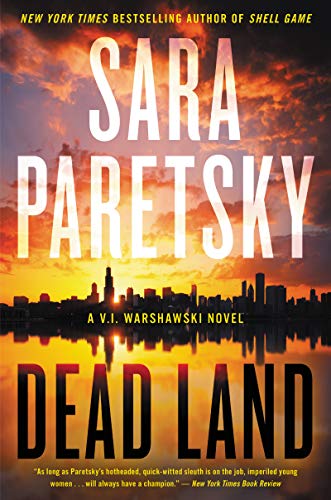
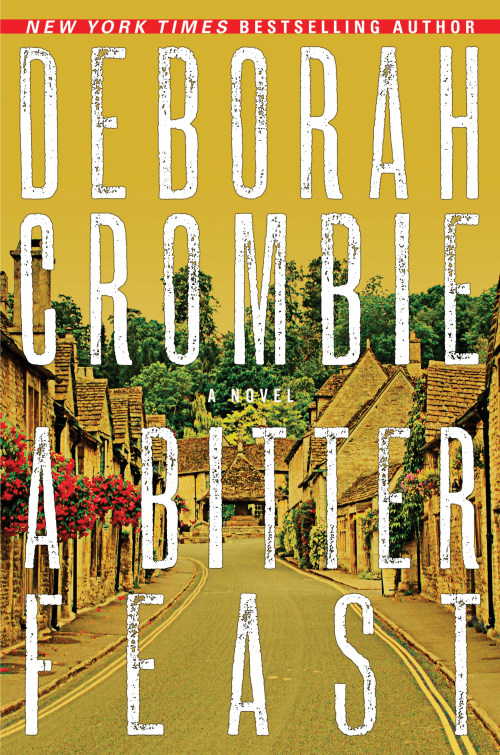
How different were Sara Paretsky’s and Deborah Crombie’s newest novels. Paretsky’s novel Dead Land centres on the story of a homeless woman and ends up being a complicated story of Chilean politics, Chicago corrupt government officials, corrupt lawyers and academics, land activists, and dogs. It was great. Deborah Crombie’s, A Bitter Feast, centres on a holiday weekend in the Cotswolds with several of her main police detectives and is a really enjoyable story about chefs and food and broken relationships. It’s just a great read.
The thing with both the Paretsky and the Crombie mysteries is that interesting things do happen with her characters – they aren’t the same people they were 10 books ago. And I like them well enough that I want to spend time with them. (Contrast this with the latest Patricia Cornwell where I realized about 20% in that I don’t like her characters and I’m sick of reading about their dysfunctional relationships and life was to short to keep reading just because I had already invested a couple of hours into the book). And each book is a satisfying story – complex enough, puzzling enough – to be enjoyable all on it’s own. Now if they could only write them faster!
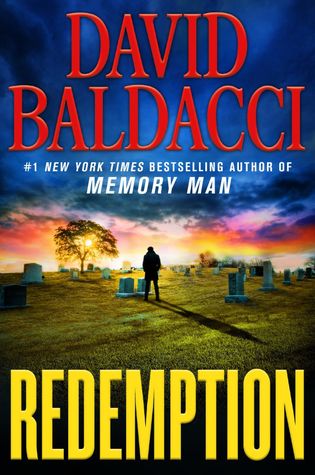
Another library book but this time I read it in a day. David Baldacci’s new novel Redemption was on the Top Reads table at the library and I like Baldacci’s Memory Man series so I took it out. It can’t be renewed so the other day when looking for a potboiler I realized I better get it read so I can take it back. With that incentive I started and frankly I had a hard time putting it down.
This is not an important book or a prize winner but I really enjoyed it. Baldacci’s last book dealt with the opioid crisis and this one deals with Russians. He’s topical and while not overtly political there is an interesting subtext in his books. Mostly though I just read it as a engrossing escape from the daily news and it didn’t let me down!
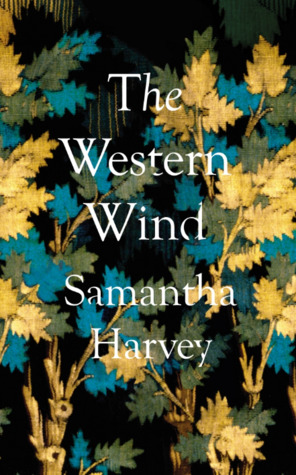
Part of the objective of this project was to wean me off buying every book that caught my fancy only to languish on my shelf and it has helped with this. I’ve certainly become much more dependent on my local (excellent) library for books. This is a good thing because a friend recommended The Western Wind by Samantha Harvey and it was in our library. He spoke very highly of it as a sort of murder mystery set in 15th century England and said it was very accurate theologically and religiously.
It took me a week to finish because it may be historically accurate but that period of history could be very depressing. I was not tempted by descriptions of mud and disease and poverty to stay up all night reading. This book really depressed me.
That said it is very well written and it may be that if the daily news was less depressing perhaps I would have had more energy for it. The narrative flows backwards. The book opens on Shrove Tuesday, moves to Shrove Monday, and then ends at the beginning on the Sunday. From the first pages you know that a member of the village has drowned but it isn’t clear whether it was suicide, murder, or accidental. The dean has arrived to ferret out the murderer (he may be wrong but he’s never in doubt) and much of the novel involves the village priest hearing confessions in preparation for Lent and then discussing those confessions with the dean who isn’t above eavesdropping either. When I found out at the end of the novel what the priest knew all along I wanted to reread the whole novel to see if he had been a reliable narrator or not. It felt a bit like The Sixth Sense except there was not quick flash through scenes to show you you had in fact misinterpreted what you had seen.
I really didn’t have the energy to reread the book and as a murder mystery it is frustrating to find out what the main character knew all along so the whodonit really isn’t. Yet it haunted me and messed with my head for a week so it is a worthy read too.



 60 Before 60