For decades I read Dick Francis novels, mysteries all with some kind of horse connection. They were great and then near the end of his life some were not so good. I read an article that said his wife had been his editor and she had died. But then his son started editing them (with credit unlike the wife) and they got better again. Then the elder Francis died and his son Felix started writing on his own. Like his dad his novels had horse connections but they tended to be grittier than his dad’s. It was all good though – I enjoyed them all.
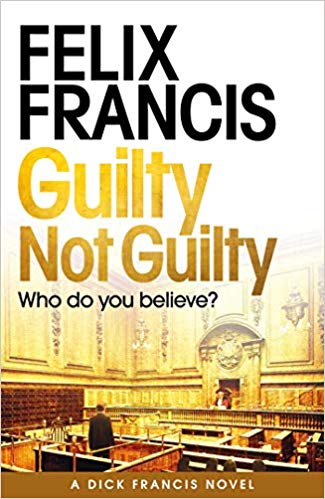
Felix’ latest is Guilty Not Guilty about a man whose wife has died and he’s accused of her murder. She’s had a long struggle with depression and has attempted suicide. He has a connection to horse racing. It was okay. It wasn’t particularly memorable and the horse connection was really very peripheral to the story. It’s a good airplane/beach/before bed kind of story but it will fade from memory quickly unlike some of his others.
So in the last three months I have read one book cover to cover that is a “serious” book and will write about it next. One book. Ugh. I have read lots of bits and pieces of other serious books but overall the last three months have been the busiest work months of the last 25 years…3 new projects and a 25th anniversary celebration. It has been hard on reading. I did, however, listen to a bunch of audio recordings of Inspector Montabano mysteries and could have included them but won’t. And I did discover a new series of mysteries thanks to multiple friends. In October I posted on Facebook that I was looking for recommendations for books for fourteen year old girls who were bored by romance novels. Several friends recommended the Flavia de Luce mysteries. I decided to try them out first and quickly fell in love with Flavia. I have read 9 of them now (the 10th is on hold at the library!) but bought some of them so will give myself credit for five.
I remember when many of my friends were reading Sweetness at the Bottom of the Pie when it first came out but for whatever reason I never picked it up. It begins the story of Flavia, an 11 year old girl living outside of London in a decaying mansion with her father, his friend/servant/fellow war veteran Dogger, and two miserable sisters in 1950. Her mother has died in Tibet in a climbing accident and her father has essentially checked out to grieve. They have a housekeeper/cook who comes in daily and an assortment of friends from the village. Flavia is an avid chemist with a particular passion for poisons and ends up solving a series of murders, one per book. There is a subplot involving a family tradition of serving in some secret spy service of the British government and both Churchill and the King make appearances in novels.
In some ways these books would work as YA reads but there is a darkness to them too that might make them hard reading depending on your sensibilities/sensitivities. The family is decidedly dysfunctional with two really cruel sisters tormenting Flavia with accusations that she was the cause of their mother’s death and dad really not attending to the girls at all. Dogger suffers horribly from PTSD, the result of terrible treatment in a POW camp in the war. And the family lives in the shadow of bankruptcy and the loss of their ancestral home. Having said this they make great reading when the only time you have to read is while eating a meal or before bed.
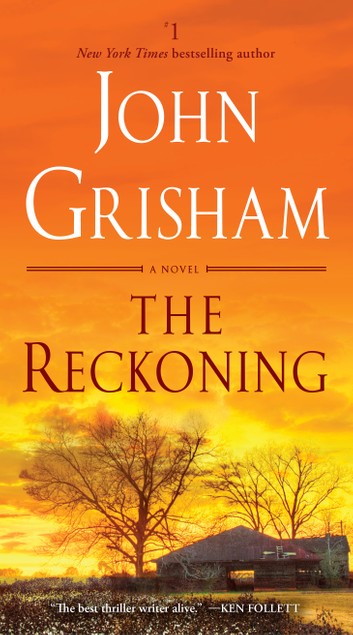
Read John Grisham’s The Reckoning. Not one of his best. In the end the story is tragic and miserable. In the middle is a long detailed description of the experience of American soldiers captured by the Japanese in the Philippines. Grisham is clearly fascinated by the history. It isn’t clear what it adds to the story of why a returned soldier murdered the Methodist minister in town. I usually like Grisham’s novels a lot but this one isn’t memorable. On the other hand it is really long so you get your money’s worth.
I love reading detective/mystery/spy type novels. I try to have one on the go all the time and at the end of my holidays I read a couple. The first two weeks of classes it has been harder to find extended time to read but I managed to read another.
David Baldacci’s The Fallen was a quick and engrossing read. It’s part of his memory man series about an FBI consultant who has suffered a traumatic brain injury and is blessed/cursed with an infallible memory. I like this character because he isn’t all hard-boiled and in control of things. And Baldacci’s pace is quick – no meandering for him. This one was particularly interesting because it was set near the Pennsylvania-Ohio border in a formerly booming mill town that is now struggling with both a devastated economy and the opioid crisis. I found it interesting to read while the debate (if you can call it that) over how to respond to our own crisis rages.
Louise Penny’s A Better Man was a much slower read but that’s because I never want them to end so I try to read them as slowly as possible. Last year when her husband died the publication of her annual Three Pines mystery was delayed for a few months but this year she was back on schedule, release the 4th Tuesday of August. I was at Chapters when they opened. Yes, I know I’m only supposed to count books I hadn’t just gone out to buy but this was bought with birthday money so it doesn’t count as a “bought” book. And yes I know that is a rationalization but I don’t care. To quote Jeff Goldblum “You can go a day without sex but try to go a day without a rationalization.” Extra points if you can name the movie.
I want to visit Three Pines. No I want to live in Three Pines. I would even endure Quebec winters to live in Three Pines. I want to be friends with Gamache and Clara and the whole village. I want to eat fresh baked croissants in the bistro and attend their little church. These are great mysteries but they are more than mysteries. These are books you want to live in, characters you want to know, conversations you want to be a part of. I can’t wait until the 4th Tuesday of August, 2020.
Ausma Zehanat Khan’s fifth book in her Esa Khattak and Rachel Getty series, A Deadly Divide, is very good. Also set in Quebec this book is about a mosque shooting. It was a tough read. It also deals with the political attempts to restrict religious symbols in public places and the increase in white supremacy activity. Her characters are complex and the plots intricate. I look forward to a sixth although I always feel like I’m battered and bruised by the end of them – even for murder mysteries they are dark.
Yesterday I finished Sara Paretsky’s Shell Game and I enjoyed it although I thought it could have moved quicker. This is her 22nd so I’ve been reading her for a long time. I like her characters, I like how she is allowing them to age. This one involves syrian refugees and the anti-immigrant climate of the US today. The story as it involved a murder and missing niece was great but there was a crucial sub-plot about stock manipulation and insurance fraud that was complicated. Since I only had time before bed to read this and I wasn’t drawing on a lot of brain power by the end of the day I mostly floated along the detailed explanations of off-shore banking and legal shenanigans.
Another audio book. Another Andrea Camilleri. This time it was August Heat. The subject matter was really disturbing and Camilleri’s way of writing about women is often unpleasant. Women are victims or manipulative and deceitful. Ugh. Will take a break from him for a while.
A few years ago I had a bad bout of pneumonia which put me in the hospital for four days. For weeks afterwards I had a hard time reading anything that required concentration. A friend dropped me off a bag of the No. 1 Ladies’ Detective Agency books and those I could manage. Alexander McCall Smith has written this series and a couple of others set in Scotland but I’ve never been able to get into those. But this series, set in Botswana and focusing on Mma Ramotswe, a traditionally built woman, and her co-director Mma Makutsi are quite lovely. Lately feeling like my soul was aching from endless terrible news of family separations on the American border and indigenous children with boils all over their bodies caused by contaminated water I decided I needed something gentle so I read #17 in the series, Precious and Grace.
These books are not gripping murder mysteries and there is no complicated discussion of justice or redemption. Generally people bring more quotidian mysteries to the #1 Ladies’ Detective agency for their solving. And there are no car chases and rarely police involved. Mostly they are slow meandering novels about the relationships between the two women at the heart of the agency, their husbands and children, and the others who are connected to them. Each novel involves at least one visit by Mma Ramotswe to her friend Mma Potokwane at her orphanage where they always share tea and fruit cake. There are comments about the new technology in cars (Mma Ramotswe’s husband owns a garage located next to the agency) but there are few clues about when the novels are set. Nelson Mandela is frequently mentioned as a hero but I don’t remember that it is every said that he is “late” so that doesn’t help date them. There are frequent discussions of how terrible it is that things are not the way they used to be but no explicit discussion of AIDS or political conflict. Drought is a constant problem but there is nothing said either about climate change.
Now that my head is less foggy I find myself wondering what people in Botswana think of these books or what someone discussing colonization or race would say about them. But mostly I just enjoy spending time with these people. They are kind and gentle and good hearted. I don’t even really worry about paying too much attention to who did what. It is enough to sit on the veranda with them and enjoy the quiet of an evening. In this book Mma Ramotswe and her husband have a conversation about whether dogs have souls (they do) and then she asks him whether our souls grow as we get older. “Yes,” he said. “Our souls get wider. They grow like the branches of a tree–growing outwards. And more birds come and make their homes in these branches. And sing a bit more.” This is theology I can live with.
Book ten was another audio book by Andrea Camilleri, Game of Mirrors. It was okay.
This past weekend I had a long road trip so I downloaded a bunch of audio books from the library to listen to while I drove. I ended up listening to two of Andrea Camilleri’s Inspector Montalbano mysteries, The Pyramid of Mud and The Snack Thief. Last night I read through his wikipedia page trying to figure out which of his many books I had read and what order they were published in since I’ve never read them in order. This morning I woke to discovered he died today.
Camilleri lived to a great age and I’m glad I still have many of his books to read or listen to. They are set in a fictional town in Sicily and follow the career and love life of Montalbano who is often disagreeable and unpleasant but at the same time ethical and persistent. I don’t have affection for him the way I do for Leon’s Brunetti nor do I find Sicily as appealing as Venice. But I do enjoy the books.
Okay…even Anglicans can be flexible. One of the friends who inspired this project suggested that I could change the rules about what counted towards my 60 and I’ve decided that since the spirit of the rules were to stop buying more books without reading the ones I had I would allow library books. Since I read Leon and Kellerman before this liturgical ruling they won’t count. But I just read the new James Lee Burke The New Iberia Blues and it does.
The Robicheaux books take place predominately in New Orleans and there is much discussion of the food, music, history, and culture of the place. Burke’s New Orleans also has a long history of racism, corruption, and exploitation. These are not light reads. Robicheaux has slowly aged through the series and now must be in his sixties. He’s a Vietnam vet along with his best friend Clete and both struggle with the long term affects of abusive childhoods and PTSD. He lives with his daughter, who he and his late wife adopted after her parents die fleeing El Salvador’s civil war. There is nothing really in the books about Trump and his wall but Burke’s sympathies for the marginalized and desperate run through the books.
These are catholic books – not just in the sense that New Orleans is a predominately Roman Catholic state and Robicheaux is a practicing catholic. I’ve read many mysteries where religious props are added but where they really aren’t integral to the story. Much more interesting are the writers who engage ideas, problems, themes, and symbols from a religious tradition as an integral part of the exploration of the murder mystery as mystery in a broader sense. If this interests you I recommend my teacher, Peter Erb’s book Murder, Manners, and Mystery which explores some very interesting intersections of murder mysteries and theological mysteries.
Burke’s books are catholic in the sense that the “whodonit” is only part of the story. Through the investigation we see Robicheaux wrestling with broader, bigger concerns of redemption, forgiveness, evil, and justice. There is also an incredible sense of the thinness between the living and the dead. Robicheaux sees and talks with the dead and their community and the community of the living are closely connected.
One of the advantages of having the flu is having the time to read. Look on the bright side..right? So yesterday I decided I wanted to read a murder mystery and took one off the pile, The Unquiet Dead, by Ausma Zehanat Khan. I forget why I picked it up originally but I’m glad I did although it is a very distressing and disturbing read. This is not a cosy village mystery.
The death that sparks the investigation is not particularly disturbing. A man falls to his death on the bluffs of Scarborough on the edge of Toronto and it isn’t clear whether he fell or jumped or was pushed. But there are circumstances that bring it to the attention of the Department of Justice and so Esa Khattak from the Community Policing Unit is asked to take a look. Quickly it becomes clear that this death is related to the war in Bosnia in the early ’90s and war crimes. That part of the story is very disturbing.
Khan’s writing is gripping and the story is intense and I learned a lot about a period of recent history that I knew peripherally but not in any detail. I didn’t learn why people turn on people that they have known their whole lives and rape and murder them but I learned a lot about the fact that they did. At the end I felt wrung out and more alarmed at the examples of right wing extremism we see in Canada and south of the border. I didn’t have any better idea of how to stop it though. But maybe it is enough that the danger seems even more real.
There are now five books with Khattak and Detective Rachel Getty. In some ways the dynamic between the two (and the tone of the book as a whole) reminded me of the relationship between Lynley and Havers in Elizabeth George’s mysteries. I won’t expect a light read but I look forward to reading more of them.






 60 Before 60