
Well I took a week of holidays and read a pile of memoir type books (with a couple of murder mysteries tossed in but I’ll talk about them next). I’ve always enjoyed reading autobiographies and biographies. For some reason the other day I started thinking back about 50 years to the bios I read as a kid. I have no reason why I picked them up but I read bios of old actors I had never seen on the screen and one of the first persons to transition openly in the media. I also read accounts of sailing voyages and Canadian explorers. Lots of them.
The first two I read on my holidays were books related to music, Richard Beck’s Trains, Jesus, and Murder: The Gospel According to Johnny Cash, and Alan Light’s The Holy or the Broken: Leonard Cohen, Jeff Buckley, and the Unlikely Ascent of “Hallelujah.”


I enjoy Beck’s books usually and I mostly liked this one a lot. I learned a lot about Cash’s life and I enjoyed Beck’s analysis of Cash’s theology. There is much that resonates with me and I grew up listening to Cash and the Carter family and all the old gospel hymns. One of the best parts of Beck’s analysis was of the tension between Cash’s patriotism and his understanding of the systemic injustices committed against many groups including indigenous people. One of the worst parts of Beck’s analysis was when he looks at the tension between a systemic analysis of injustice and the personal. It isn’t actually clear that there is a problem in Cash’s view between critiquing the dehumanizing force of the American penal system and the possibility for redemption for the sinner. But Beck levels an attack on Social Justice Warriors who care only for the systemic critique and don’t act in love. Well this may be Beck’s concern but there is no evidence it is Cash’s. Further the term itself is such a weighted term used to dismiss and denigrate people that I almost put the book down at that point. I’m glad I persisted but it is an ugly moment in an otherwise interesting book.
Light’s book was surprisingly engaging. I picked it up initially because I love Cohen’s music and I especially love the song Hallelujah but when I started reading I was sceptical that there was enough in this for a whole book. I was wrong. It was a fascinating history of the song and the various ways it has been interpreted. There are so many possible verses that just an examination of which verses singers choose to sing is illuminating. Now there are a lot of details included about who played back up and who produced recordings etc that meant little to me and I found I skimmed some of that. But the discussion of why the song engages people is fascinating. Essentially he suggests that the tune itself is so emotionally evocative that it has become a lazy way for television or films to get to people emotionally. So the choice of verses ends up seeming less important than the tune itself which produces deep emotions. This leads to an interesting discussion of how it has become a spiritual song for people who aren’t religious. I did want to have a much longer discussion about what those two terms signify and what this says about our cultural time.
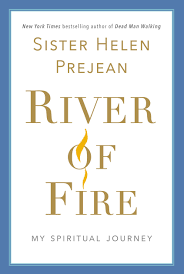
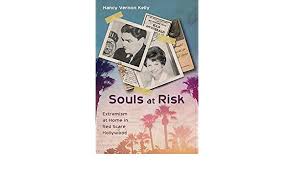
The next two books I read were Sister Helen Prejean’s memoir River of Fire and Nancy Kelly’s memoir Souls at Risk. Both spend a lot of time looking at the same period of the fifties and sixties but from very different points of view. This is Prejean’s prequel to her famous book Dead Man Walking which was made into an academy award winning film with Susan Sarandon who played Prejean and Sean Penn playing the death row inmate she journeyed with. This book takes us from Prejean’s days as a student in a Catholic girls school, to the novitiate in religious life, her own work as a teacher, and ultimately to her ministry to men on death row. It’s a fascinating book if you are interested in the impact of Vatican II on North American catholicism and the changes that happened in religious life in those decades. It’s also interesting if you want to watch how one person’s social conscience came alive.
Kelly’s book was fascinating. Her father was a radio producer for people like Eddie Cantor. The family lived in Hollywood and he also had a business organizing concerts. He organized a concert for Pete Seeger in 1960 only to have a huge protest because Seeger refused to sign the loyalty oath. This was still the era of McCarthy and Seeger had been blacklisted for years as a suspected communist. It is never clear why her dad organized the concert in the first place. He had no problem signing the loyalty oath and certainly was no radical. When things blew up though and he was attacked for being a communist sympathizer this conservative veteran became increasingly right wing. Kelly describes her childhood in a home where dad’s behaviour and views became increasingly extreme and the rest of the family learned to be silent. Ironically the Seeger concert began a journey for Kelly to a much more progressive world view.
Kelly’s memoir isn’t linear. She organizes it around the structure of the big house that she grew up in. It means she often returns to the same incidents, the same period of time, circling back from the perspective of another part of their lives. It’s a really interesting idea and at times it revealed new things about significant incidents but there were times I thought it was deja vu all over again. As someone who’s childhood was influenced greatly by Pete Seeger and the politics of the 60s and 70s (I’m about 10 years younger than Kelly) it was a very interesting read though.
I think I have a particular love of memoirs because reading them help me understand my own life. They give me ways of thinking about experience and how I interpret them. They help me make choices about my own journey and where it might go.
 60 Before 60