
My light reading this month has been to continue the Wesley Peterson mysteries set in Devon. So far I’ve read The Shining Skull, Flesh Tailor, and The Blood Pit. I’ve gotten a bit out of order because of what was available at the public library. The premise is that Wesley’s friend and archaeologist Neil Watson is always working on a dig that mirrors the murders Wesley is investigating. It’s a pretty ludicrous set up by book 13 but they are fun and I’m enjoying them. My more serious fiction right now is Abraham Verghese’s The Covenant of Water which I am savouring. I’m listening to the audio book read by the author and it is achingly beautiful and sad and moving. I’m about 60% through it now and already grieving that one day soon I will finish it. Then I expect I may have to read the paper copy so I can write out the lines I never want to forget. I loved his earlier novel Cutting for Stone and kept buying copies and giving them away. I think this will happen with this one too.
Tag: novels
Books 53, 54, 55, 56, and 57
A few weeks ago I took a week for study leave and sat in my back yard reading novels and memoirs by people of colour. It was a fascinating week that stretched me. Only one was a book from my shelf – I went to Chapters, pulled up their list of black and indigenous writers and pulled four that interested me. So the legalist in me thinks they shouldn’t count towards my 60 but God willing I’m going to pass that goal soon anyway and I still have 11 months until I turn 60. It’s hard to go a day without a rationalization.
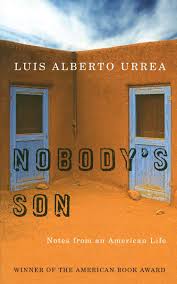
Urrea’s book was already on my shelf. I had picked it up after reading an interview with him a year or so ago. His father was Mexican general and his mother a WASP from an establishment family on Staten Island. This is a memoir that gives glimpses into his childhood, his parents’ volatile marriage, and the tensions in his identity as neither truly Mexican or American. It’s a really powerful, often very moving book. After marrying his parents end up living a much more financially constrained life and it gives some interesting glimpses into the intersections of ethnic and class identity. It also gives some disturbing glimpses into the impact of a toxic masculinity that tried to ‘toughen’ him up as a boy. Now I want to read more of Urrea’s poetry and fiction. He’s a beautiful writer.

Frying Plantain is a first novel by Zalika Reid-Benta set in Toronto . The protagonist has been born in Canada to a mother who had come from Jamaica. She is treated often in school as not really Canadian but her friends who were born in Jamaica don’t consider her truly Jamaican either. So she too is caught between two identities. Her mom is a single mom with a difficult relationship with her own mother. They often need to turn to the grandmother for help because of economic struggles but that help always comes with complicated obligations.
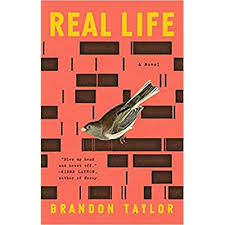
I love campus novels and this one is a great contribution to the genre. Brandon Taylor draws on his own experience as a queer black student in the midwest to write this novel about a queer black grad student from Alabama who has moved north to an unnamed university to do his research in biology. There he discovers that he doesn’t really have a place among the other grad students who along with the profs subject him to a multitude of micro aggressions. As I read it I kept thinking about what Kendi says about how calling these things micro aggressions fails to capture how soul destroying these acts are. There is even a scene where a white woman weaponizes his status as a black man to cover up her own screw up. Much of the book is really disturbing.

I hadn’t heard of this novel or writer until I found it on the list of indigenous books at Chapters but wanted to read it as soon as I heard it was set on the Peguis reserve in Manitoba and in Winnipeg. I don’t know this reserve but I know some of the area spending my summers growing up on Lake Winnipeg. And when he writes about Winnipeg I can see the places he’s describing. The novel moves back and forth in time and place from Jonny’s childhood on the reserve and his life in Winnipeg. He’s two-spirited and the novel describes scenes of violence at the hands of men who want to ‘toughen’ him up similar to those Urrea describes. The life he describes on the reserve is a complicated mix of trauma, abuse, addiction, but also love, generosity, good humour, and resiliency. One week in my reading group we had a long discussion about the ways in which groups get labeled as traumatized people – a point Kendi wants to resist – and I thought about that a lot reading Whitehead’s novel. I find myself thinking about this novel a lot and have since discovered I’m slow to this party as many of my friends love his work already.

My favourite read of the week though was We Have Always Been Here by Samra Habib. I basically read it in one sitting because I couldn’t put it down. This is a memoir by a writer who came to Canada as a refugee with her family when she was in elementary school. They are part of a small sect who are persecuted by the Pakistan government and fled the threat of violence. Her marriage was arranged by her mother when she was 13, she married at 16, and was divorced at 18. She married again only to divorce him when she realized she was queer. There is so much in her book about the experience of an immigrant family, discrimination against people of colour and muslims, and the tensions in her own family over the role of women and sexuality. I found the book so engrossing and thought she addresses some of the issues of sexuality and gender really well that were the weakest in Kendi’s book. It is good to read them together.
I really valued reading these books and have another pile of novels and memoirs to continue reading writers of colour. A friend of mine has made a commitment to read books by women and people of colour for a year – each month she’s focussing on a different scholar – and won’t post any writing on facebook by white men for the same year. I’m curious to see what she learns by doing this. I know that this opened me up to a bunch of experience that isn’t mine and I enjoyed it even as I was challenged by it. Often when white folk post that they are going to do this it sounds like a penance. Maybe that’s part of the problem with some folk – we don’t like stepping out of our comfort zone much. But this is a happy quest for me and one I’d recommend highly!
 60 Before 60