It’s been a while

I’ve gotten out of the habit of reading the books on my shelves instead of constantly buying new ones that pique my interest only to be too busy to read them. This year I did the Goodreads challenge and read 74 books most of which were murder mysteries read before bed. Work was intense and insomnia was my constant companion. But there were more challenging reads mixed in there. 

I read all the long form journalism I can by Rebecca Solnit, Masha Gessen, and Timothy Snyder and loved three of their books I read this year. I read the print version and listened to the audio version of Solnit’s Orwell’s Roses. It is a beautiful wedding of important ideas and gorgeous writing. Masha Gessen’s Surviving Autocracy is disturbingly relevant these days and Timothy Snyder released an audio version of his very important book On Tyranny with additional talks on the war in Ukraine. His course on the history of Ukraine found on the Yale Youtube site is very worth watching in its entirety as well.

Krista Tippet’s podcast On Being introduced me to the wonderful Irish poet and theologian Pádraig Ó Tuama and his new book Poetry Unbound based on his podcast of the same name is delightful. It is another book I have in print and audio format and when I can’t sleep his voice is balm for my soul. Ditto his lovely collection of autobiographical writings In the Shelter which carried me through a stressful time. In recent years I’ve discovered the challenge and the power and the beauty of the writing of James Baldwin and Eddie S. Glaude Jr’s book Begin Again is a wonderful exploration of his work. After reading David Graeber and David Wengrow’s The Dawn of Everything I am challenging myself to read the big pile I have of Graeber books sitting by my desk. 

For fiction the highlights of my ‘serious’ reading were Barbara Kingsolver’s new, much acclaimed, novel Demon Copperhead. I find myself thinking about it all the time. As healthcare in Alberta becomes more and more precarious and the future of oil and gas in question Kingsolver’s novel about the collapse of extraction industries and the developing opioid crisis felt very relevant. Ahmed Saadawi’s Frankenstein in Baghdad also haunts me. It’s a disturbing look at Iraq following the war and the ambiguities of virtue and vice. This novel contributed to some of my problems sleeping for a while. 

As someone who enjoys police procedurals, academic settings, and mysteries set in Britian I enjoyed discovering Elly Griffiths and Kate Ellis this year. I was sad to read the last Peter Robinson mystery and was very glad to read another of Thomas King’s Thumps DreadfulWater books. King is always a fun read and although it’s set across the border it always feels close to home and this time Stand Off even figures in the story.

I’m glad I kept track of the books I read this year. It didn’t feel like I had read much so it was reassuring to have a record of the reading that I did manage to do. I do have a very very big pile of books that wait to be read though so maybe this year I need to go back to my resolution of my original project to only read books from my shelves or the public library. Maybe it is time to start a 65 before 65 project. I’m 32 months away I think so replicating the same pace of 2 a month would do it. Onward forward!
https://www.goodreads.com/user_challenges/38375680

Book 33 and 34

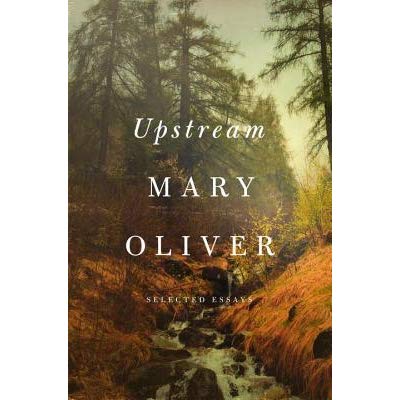
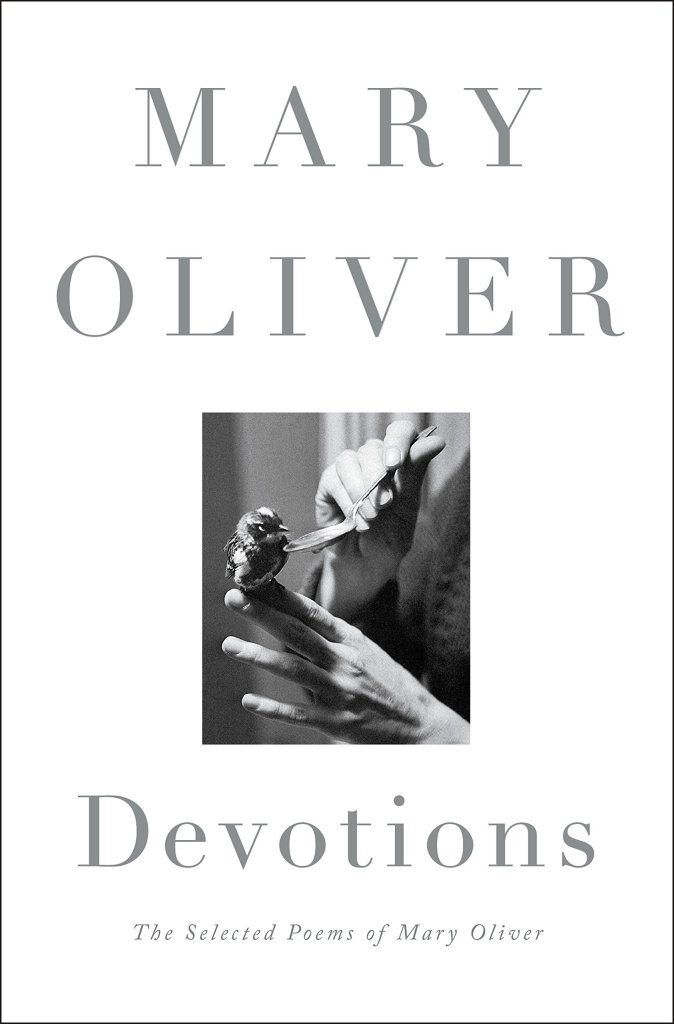
Yesterday was the first anniversary of the death of Mary Oliver, one of my favourite poets…maybe favourite. I gave a talk on her last week so pulled two of her books off my shelf and read them finally. Upstream is a collection of essays and Devotions a selection of poetry from many of her books.

Both are beautiful books. It is in Upstream that Mary Oliver writes her oft quoted remark that attention is the beginning of devotion. There is a triptych of essays on creatures she pays attention to that are especially moving: a spider, a wounded gull, and an owl. It was the essay on the wounded gull in which she describes all of their efforts to care for it until ultimately it died that gutted me: “We grew fond. We grew into that perilous place: we grew fond.”

Devotions is a wonderful read…it includes all her famous poems, like “The Summer Day” and “When Death Comes” but it also introduced me to poems I didn’t know. I have read that there have been critics who dismiss her poetry as too simple, essentially as not intellectual enough, but what struck me reading so many of her poems at one time is how often what starts as a description of some wildlife becomes a moral claim on your life. If you truly see then you shall be changed. In an interview with Krista Tippet she said she cared very much about climate change but she thought you could catch more flies with honey than with vinegar. If she could help people fall in love with the world around them then perhaps they might try to save it. But then there is also this poem:

Lead

Here is a story

to break your heart.

Are you willing?

This winter

the loons came to our harbor

and died, one by one,

of nothing we could see.

A friend told me

of one on the shore

that lifted its head and opened

the elegant beak and cried out

in the long, sweet savoring of its life

which, if you have heard it,

you know is a sacred thing,

and for which, if you have not heard it,

you had better hurry to where

they still sing.

And, believe me, tell no one

just where that is.

The next morning

this loon, speckled

and iridescent and with a plan

to fly home

to some hidden lake,

was dead on the shore.

I tell you this

to break your heart,

by which I mean only

that it break open and never close again

to the rest of the world.

Book fourteen

In the last 25 years I’ve had 3 bouts with cellulitis. All three necessitated long stints of IV antibiotics which until recently meant day time treatments M-F in outpatients and evening and weekends in Emerg. There would come a point when I wasn’t feeling so terrible anymore and I would start to find the experience fascinating. I know, weird eh? I am still friends with some other patients and with some of the nurses I met during the last two runs. Before renovations which made the ER all white and shiny and much more private it was an amazing place to watch human interactions. I used to know who was on triage when I walked in just from the anxiety levels in the waiting room. There were a couple of nurses who were incredibly skilled at calming people down and even making us laugh in the midst of our suffering. I decided that I should have gone into medical sociology when I did my uni studies as there really is nothing more interesting to study. I could have done my field work in ERs!

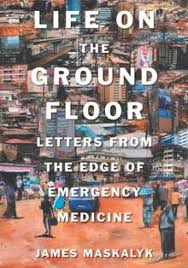
One of the things I grew to love about going to the hospital three times a day was all the time I had to read. My fascination with the place also lead to my reading lots of medical memoirs and it is a big field. Brian Goldman’s The Night Shift, Tilda Shalof’s The Making of a Nurse, and Victoria Sweet’s God’s Hotel are my three favourites in that genre. My 14th book in this project is James Maskalyk’s Life on the Ground Floor: Letters from the edge of emergency medicine and it will go on the shelf next to others as a great read. Maskalyk alternates between working in Toronto and Ethiopia and weaves together stories from both with stories of his grandfather who lives in northern Alberta. It’s a very moving book that seemed to me to be a meditation as much on dying as on healing.

I’ve been thinking about this book since I finished it. One of the things I find fascinating about it is that while there are obviously big differences between emergency medicine in Toronto and Addis Ababa what struck me was the similarities. In both situations it is Maskalyk’s connection to patients that is front and centre. And in particular, it is his ability to remain present to his patients even in the presence of suffering and their dying that moved me. He describes the signs of burn out when indifference and anger become the attitude of staff towards patients. It struck me how this parallels in some ways the experience of ministry when clergy begin to feel manipulated, or criticized, or taken for granted and begin to resent the people they are called to serve. But while Maskalyk may say, it is time then to quit, he’s actually very understanding of the struggles to stay healthy in medicine (and I suspect “helping” professionals generally). Certainly there are unique aspects to the kind of intensity he experiences in his work and particular issues in working shift work (he talks about the dangers of self-medication to get to sleep and to wake up) but there is a lot of wisdom in his observations for anyone struggling with compassion fatigue or secondary trauma.

At one point Maskalyk talks about how in addition to the worries docs start taking the numbness home too. He says that joy starts to seem like it is for fools because in the end all of us will die. This made me think of Caleb Wilde’s comments about being risk averse and overly protective of children because of the awareness of how badly things can go. A friend of mine, a funeral director, asked me once, when I was really cautious about walking down a dock to get into a boat, if I had always been this scared of the water. No I said, I grew up on boats and around water. I’d become this way after 20 years of doing funerals. Working with post-secondary students too many of the services I’ve done have followed tragic deaths. It is easy to become obsessed with the fragility of human life and to begin to resent people who seem blissfully unaware of how quickly their lives can change.

There is a line in the film version of Shadowlands in which a student says to C.S.Lewis, something to the effect of “I read to know I’m not alone.” I felt often reading this book, despite living and working in very different circumstances, a sense of recognition. In an incredible poem entitled “fuck you ee cummings”, Ron Currie writes:

when you’re a writer people sometimes ask
why you decided to be a writer
insofar as there’s any answer
the thing i’ve settled on is that
writing is an act of faith
the faith that you and i love the same things
fear the same things
grieve the same things
no matter that i am a man and you are a woman
or that i am white and you are latino
or that i am american and you are afghani 
faith, in short, that love and fear and grief are the same thing everywhere
and the rest is just details
and that if i write about the things i love and fear and grieve,
you will see yourself in me
and vice versa
and having looked in the mirror
and seen ourselves rendered strange yet recognizable
we will be less lonely and afraid and angry
and less inclined to want to kill each other
and less likely to dismiss each other’s suffering
maybe.

Maskalyk is a really good writer.

Book Five

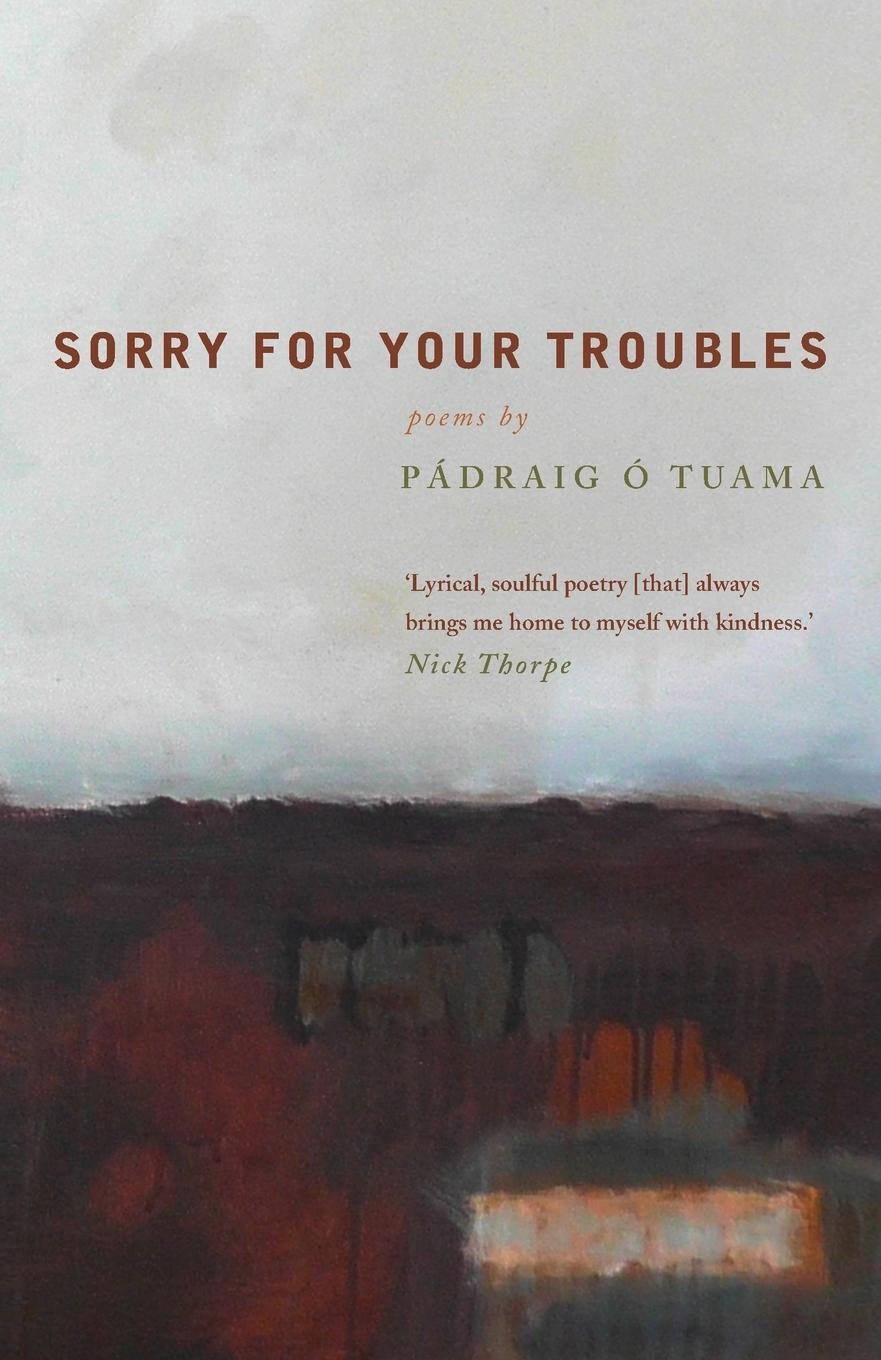
On Good Friday, when news of the death of Kyra McKee broke I set aside the book I was reading and turned to a small book of poems by Pádraig Ó Tuama. I had first heard an interview with Pádraig on the podcast On Being and had been incredibly moved by what he had to say about his own story and the story of his work in [the]north[ern][of]ireland with the Corrymeela community. The Corrymeela community works to bring reconciliation and healing between north and south, catholic and protestant.

In the podcast he read this poem and it has echoed in me in so many situations personal and communal where we face pain and injustice and memory.

[the]north[ern][of]ireland

It is both a dignity and

a difficulty

to live between these

names,

perceiving politics

in the syntax of

the state.

And at the end of the day,

the reality is

that whether we

change

or whether we stay

the same

these question will

remain.

Who are we

to be

with one

another?

and

How are we

to be

with one

another?

and

What to do

with all those memories

of all those funerals?

and

What about those present

whose past was blasted

far beyond their future?

I wake.

You wake.

She wakes.

He wakes.

They wake.

We Wake

and take

this troubled beauty forward.

In the last week I have read these poems and meditations slowly and returned to points again and again. His description of the visit of Queen Elizabeth II to Belfast where she would meet Martin McGuinness, the Deputy First Minister of the Northern Ireland Assembly and member of Sinn Fein and shake his hand is very moving:

“Because shared space without human touching doesn’t amount to much.”

You can listen to interviews and see his talks on his website http://www.padraigotuama.com/ and everything is better heard with his lovely gentle voice but I’ll leave you with this: “The Irish word for shadow, scáth, is also the word for shelter. We live in the the shadow and we live in the shelter of each other.”